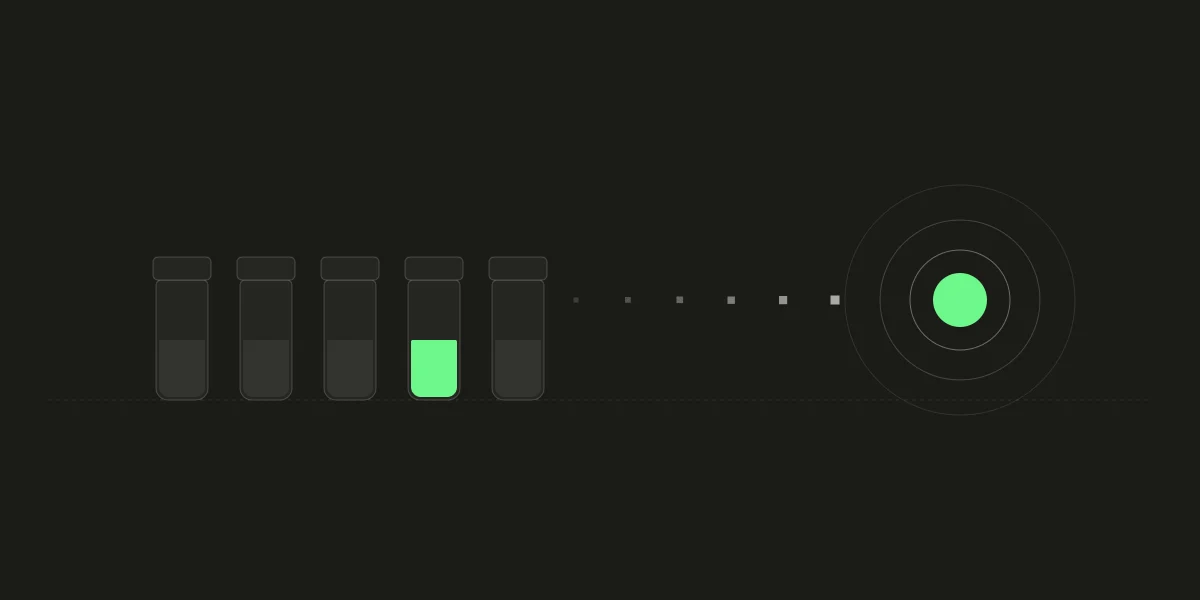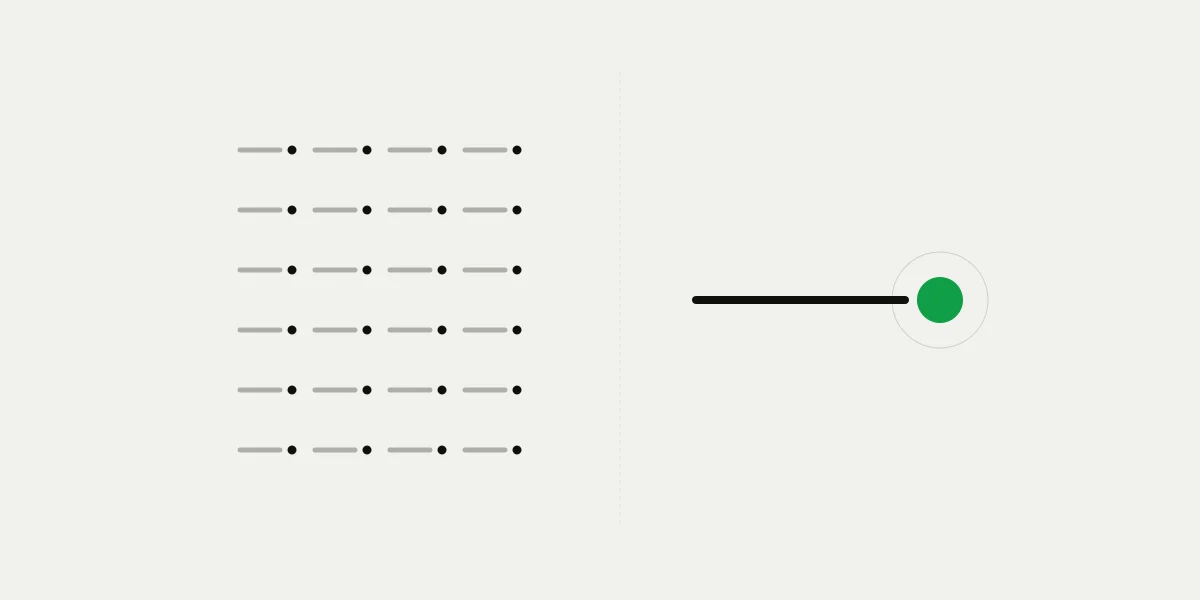
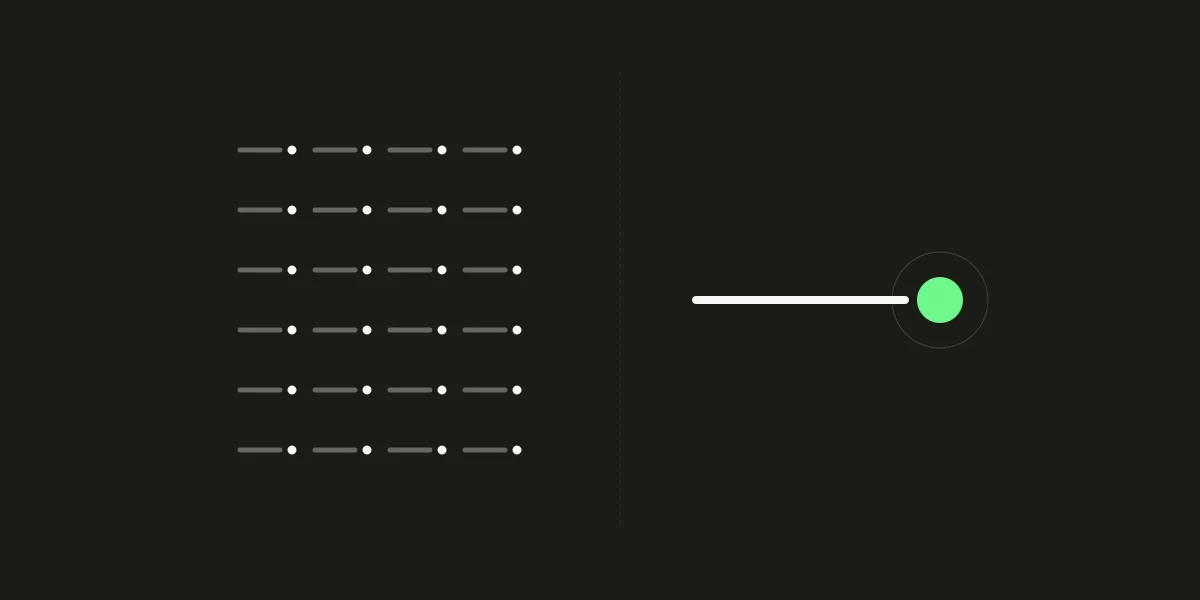
Some businesses sell one thing at a time: a pass, a license, an order of goods. Others sell many small things to the same customers all day, such as social media services, proxy bandwidth, API calls, or game credits. For the second kind there's a real choice in how to bill: a payment for every order, or a prepaid balance that customers top up and spend.
Both run on the same 402pay checkout. This post compares what each one costs, how it feels to the customer, and what it asks of your own system, so you can pick the one that fits.
Two ways to bill
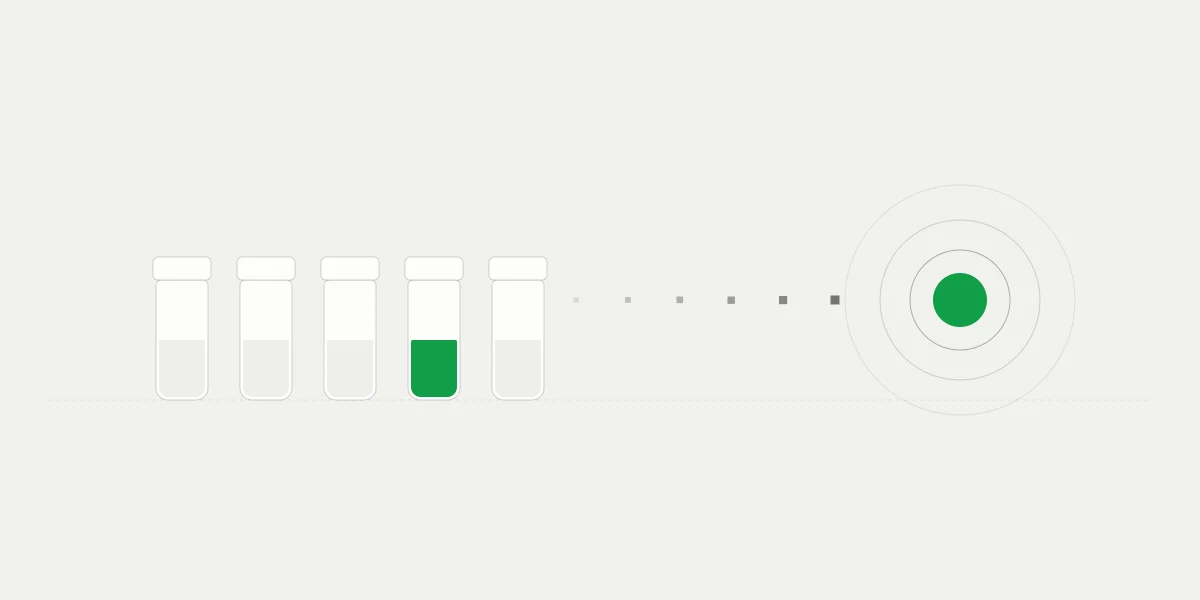
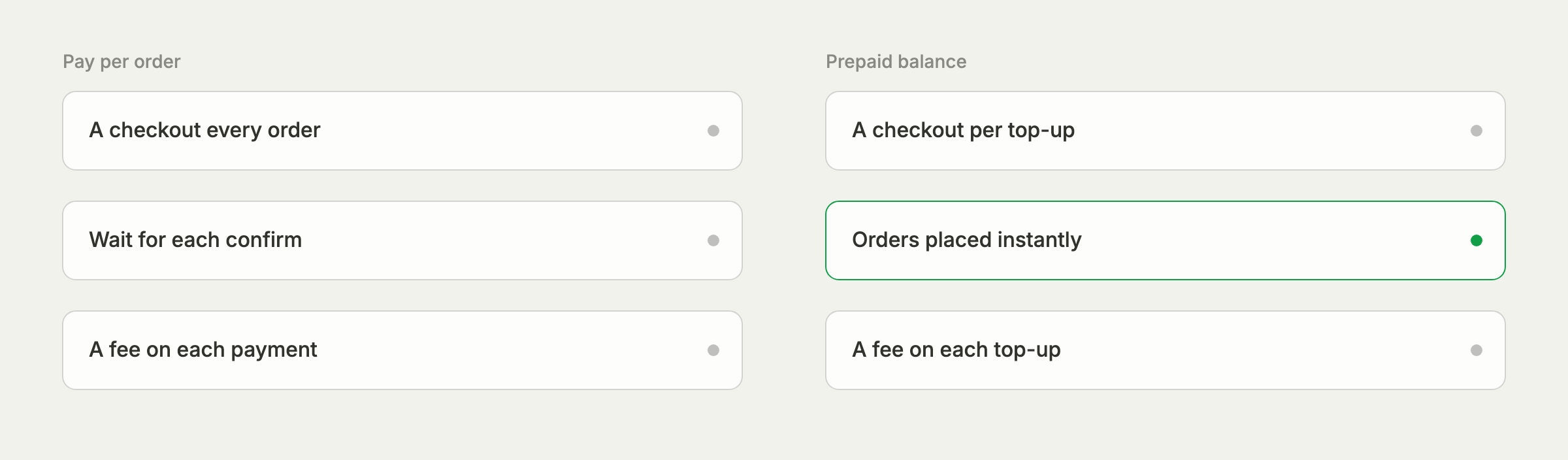
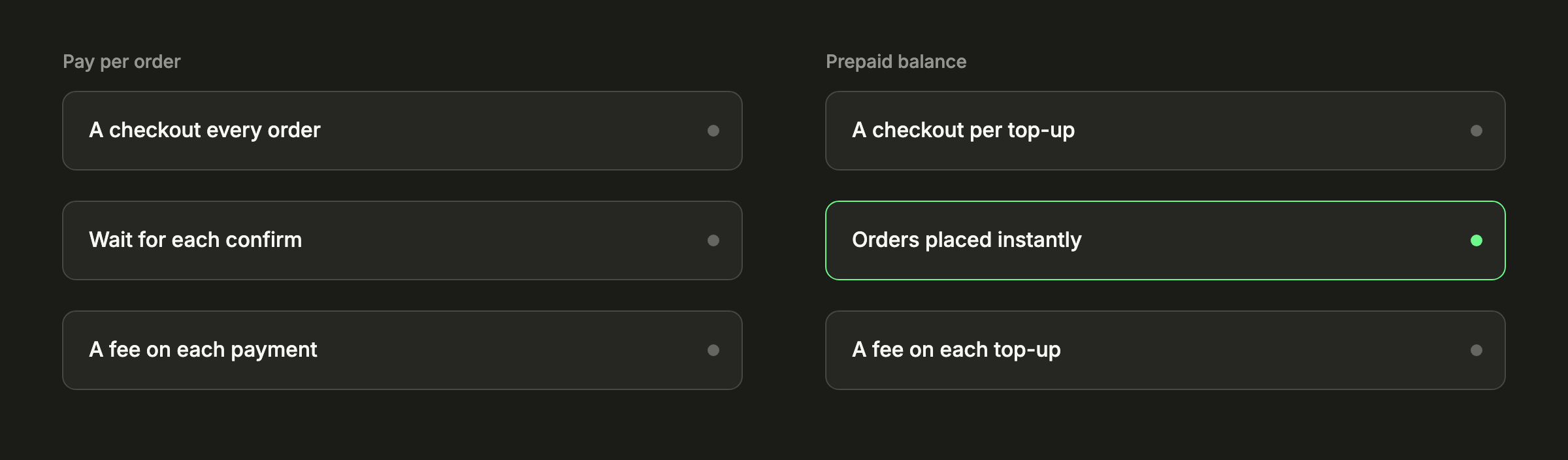
With pay per order, every order is its own payment. The customer picks what they want, pays for exactly that at a hosted checkout, and your server fulfills it when the payment confirms. Nothing is left over, and every payment ties to one order.
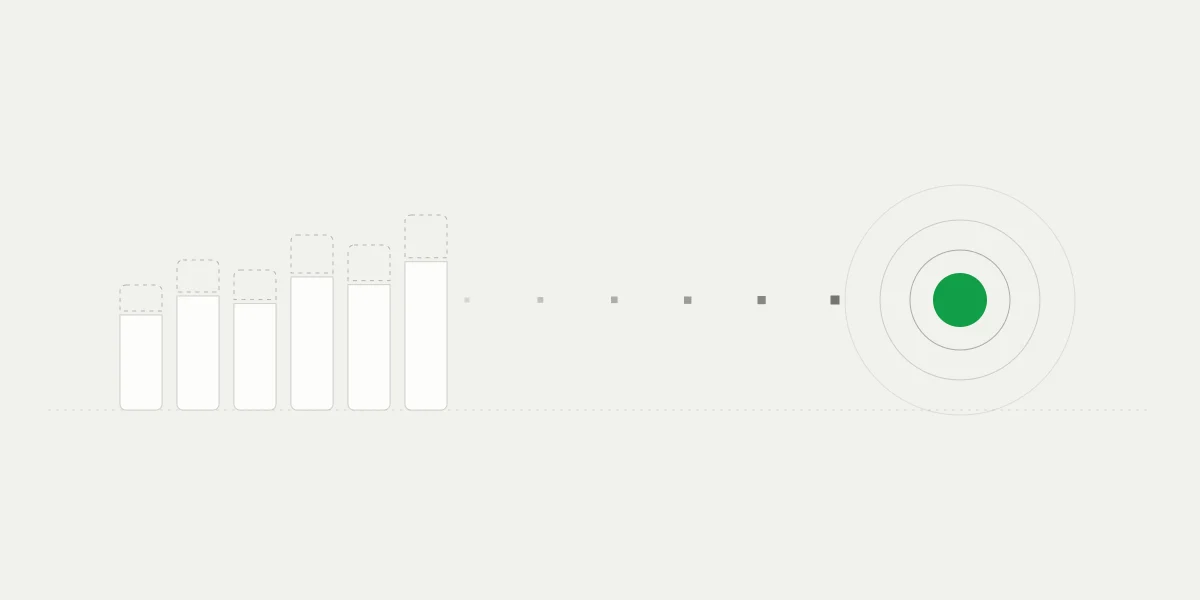
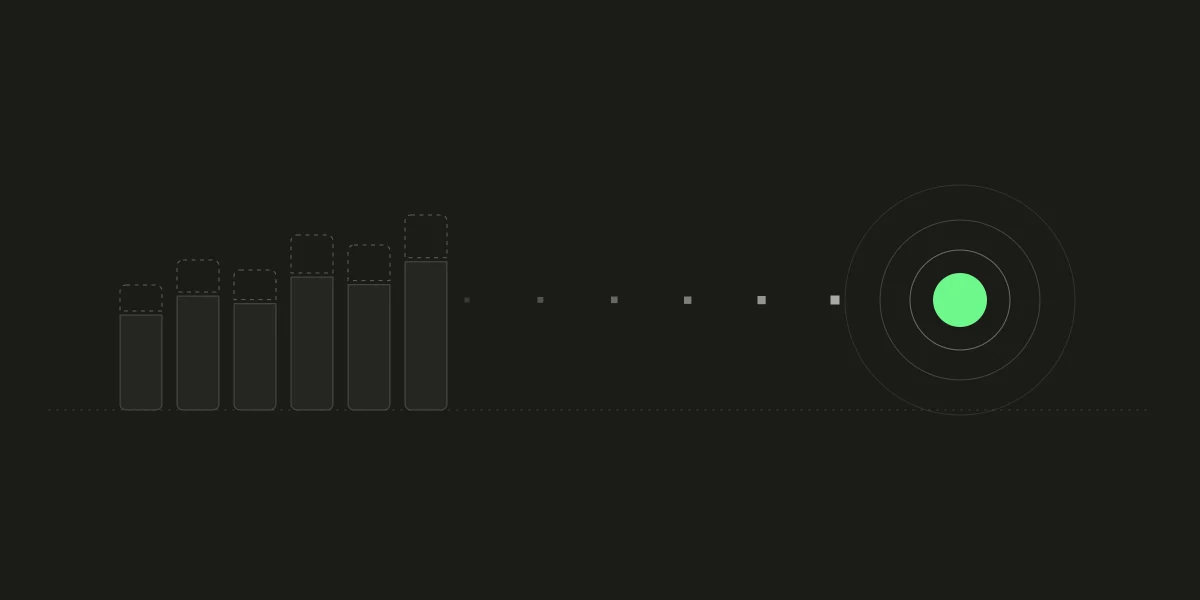
With a prepaid balance, the payment is a top-up. The customer adds funds once, your server credits their balance when the payment confirms, and orders draw from it with no checkout at all. Orders can be placed in a second, by a person or by software through your API.
What each costs
A successful stablecoin payment on 402pay costs 1% + 10¢. The fixed part is what decides between the two models: it's charged once per payment, so it counts for little on large orders and a lot on small ones. Take a customer who spends $100.00 a month in 20 orders of $5.00, paying in USDC:
- $3.00
- in fees paying for each of 20 orders
- $1.10
- in fees for one $100.00 top-up
- 20×
- fewer confirmations to wait for with a balance
The network fee follows the same pattern. The customer's wallet pays it on every transfer, so twenty payments cost them twenty network fees. On Solana or Tron that's small; on Ethereum it can be a real share of a $5.00 order. And a payment has a floor of $1.00, so orders below it can't be paid one by one at all.
Side by side
| Measure | Pay per order | Prepaid balance |
|---|---|---|
| Payments | One per order | One per top-up |
| Fixed fees | On every order | On every top-up |
| Order placed | When the payment confirms | Instantly, from the balance |
| Orders by API | Each needs a checkout | Draw from the balance |
| Money you hold | None beyond orders | Customers' unspent balances |
| Refunds | A send from your wallet | Back to the balance, or a send |
| Your system | Fulfill on payment | A ledger and a balance |
Bill the way your customers buy: once in a while, or all day long.
When pay per order fits
- Orders are large enough that the fixed fee is a small share, and customers buy now and then.
- Each purchase is a thing on its own: a pass, a license, a plan, an item shipped.
- You want nothing on your books between orders, and no balance to explain or refund.
Streaming passes and software licenses usually work this way. Our posts on streaming site payments and payments for software and SaaS cover them.
When a balance fits
- Orders are small, frequent, and from the same customers, so the fixed fee would add up.
- Customers place orders through your API, or expect them to start the second they click.
- Orders can fail or deliver partly, and a refund to the balance is easier for everyone than a send.
Social media panels, proxy sellers, API credits, and game currencies usually work this way. The guide to payments for SMM panels walks through the top-up side, and crediting a prepaid balance from webhooks covers the ledger behind it.
Or both: pay the difference
Many platforms with a balance also offer a shortcut at the moment of an order. If the balance doesn't cover it, create a top-up for exactly the difference, or for the difference rounded up to your smallest top-up, and place the order when that payment succeeds. The customer never sees a separate Add funds step, and you keep one ledger.
Whichever you choose, every payment lands in your own wallet, and you can let customers pay 402pay's fee at checkout. The social media panels page shows a balance top-up from start to finish, and pricing lists every fee.
Common questions
- For small, frequent orders, usually. A payment's fee has a fixed part charged once per payment, so 20 orders of $5.00 cost $3.00 in 402pay fees paid one by one and $1.10 as one $100.00 top-up.
- When orders are larger and occasional, each purchase stands on its own, and you'd rather not hold customers' unspent money between orders.
- Yes. A common pattern is to charge the balance first and, when it doesn't cover an order, create a top-up for the difference and place the order once it succeeds.
See what 402pay can do for you.
Discover how 402pay helps your business accept any card and get paid in crypto, straight to a wallet you control.