On 402pay, a crypto payment costs 0% at an introductory rate plus a flat $0.25, and a card payment costs 4% with no flat fee. Those two shapes behave very differently as orders grow: a flat fee shrinks to almost nothing on a large order, while a percentage grows with every dollar.
This benchmark works through what each costs at real order sizes, where the two cross over, what a typical month looks like, and how passing fees on to customers changes the picture. Every figure comes from the same pricing the checkout charges by.
The two prices
A crypto payment carries no percentage at all during the introductory period, only the flat $0.25 on each payment that succeeds. A card, Apple Pay or Google Pay payment carries 4% of the amount and no flat fee, which covers the card networks and the conversion to crypto.
Either way, the payment lands in your wallet whole. 402pay's fees are owed on a separate fee statement and collected from time to time, rather than taken out of each payment, so a $100 sale always arrives as $100. See how fees are collected for how that works.
What each costs, order by order
Here is the fee on a single successful payment, and what share of the order it represents:
| Measure | Crypto | Card |
|---|---|---|
| A $5 order | $0.25 (5%) | $0.20 (4%) |
| A $10 order | $0.25 (2.5%) | $0.40 (4%) |
| A $25 order | $0.25 (1%) | $1.00 (4%) |
| A $50 order | $0.25 (0.5%) | $2.00 (4%) |
| A $100 order | $0.25 (0.25%) | $4.00 (4%) |
| A $500 order | $0.25 (0.05%) | $20.00 (4%) |
| A $1,000 order | $0.25 (0.03%) | $40.00 (4%) |
On a $5 order, the flat fee is a meaningful share of the sale, and a card costs less. By $50, crypto costs 0.5% of the order against 4% for a card. On a $1,000 order, the card fee is $40.00, while crypto is still $0.25.
Where the lines cross
The two prices are equal at $6.25: 4% of $6.25 is exactly $0.25. Below that, a card payment costs less than a crypto one. Above it, crypto costs less, and the difference grows in a straight line with the size of the order.
- $5 order5%
- $10 order2.5%
- $25 order1%
- $50 order0.5%
- $100 order0.25%
- $500 order0.05%
- $1,000 order0.03%
For most businesses, the break-even is low enough not to matter: very few online orders are under $6.25. The more useful question is how much of your revenue comes in larger orders, because that is where the percentage on cards adds up.
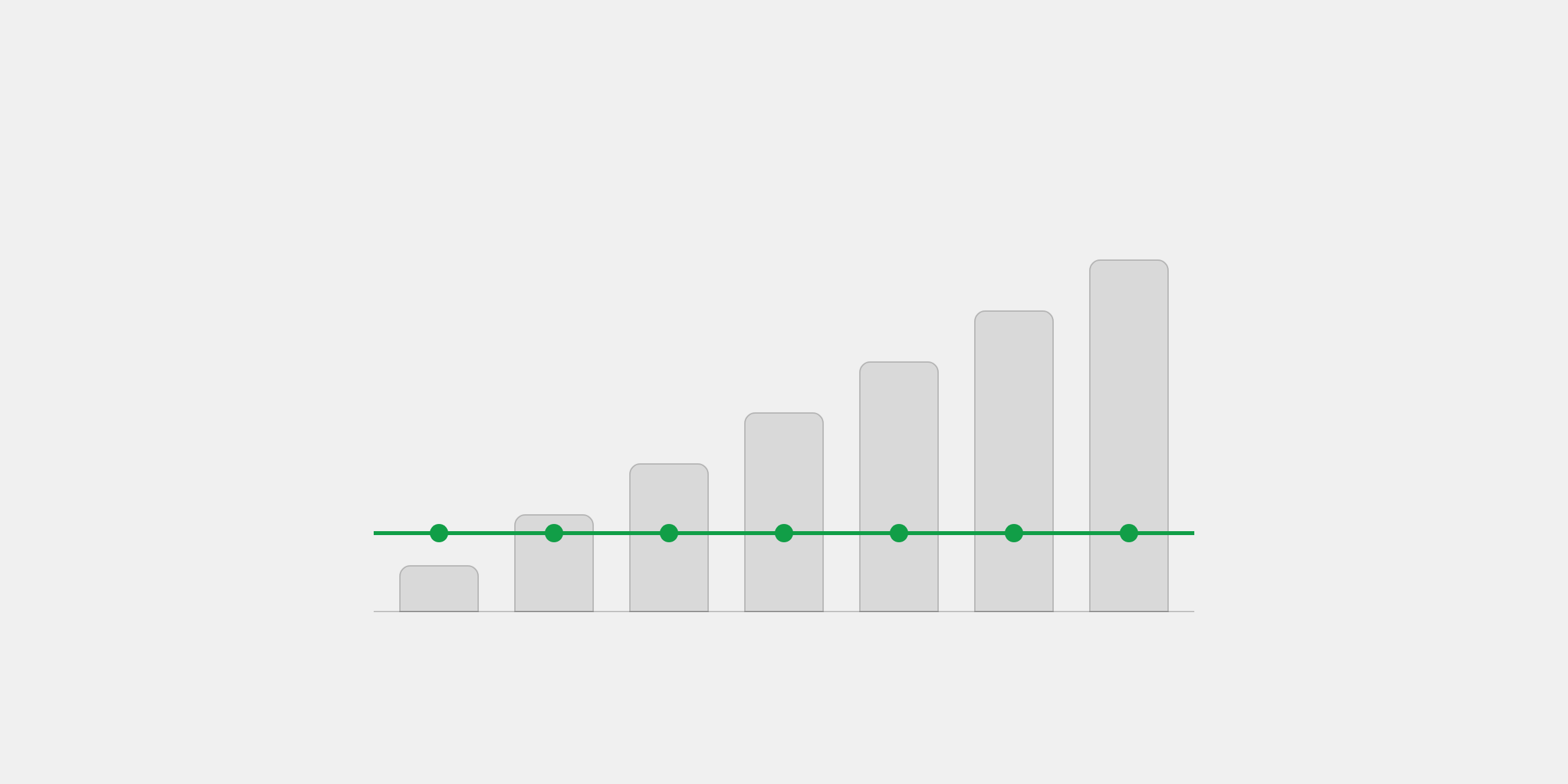
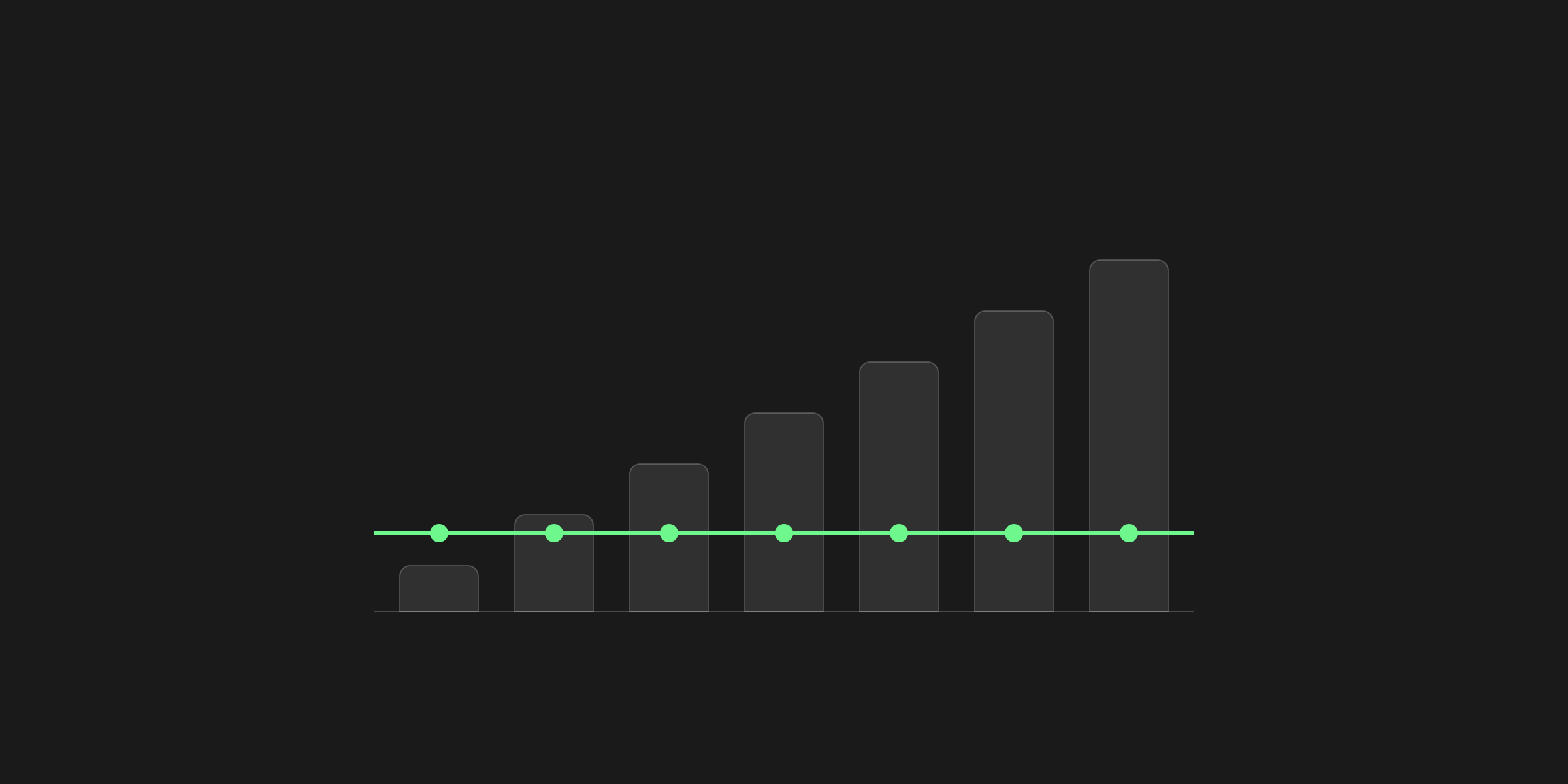
A flat fee shrinks as orders grow. A percentage grows with them.
A month, worked through
Take a business that takes 200 payments a month at an average of $50, or $10,000 in all. Its 402pay fees would be:
- All in crypto: 200 × $0.25 = $50.00 a month.
- All by card: 200 × $2.00 = $400.00 a month.
- Half and half: $225.00 a month.
Add the wallet: $5 a month for a self-custody wallet created in the dashboard, or $15 to connect one you already use. There are no setup fees and no contracts.
The split between card and crypto is up to your customers, not you. What you control is offering both, so card customers can still pay and crypto customers pay the least.
Letting customers pay the fee
Some businesses would rather not absorb processing fees at all. With Customers pay the fees turned on, checkout adds the fee for the method the customer picks to their total, and shows it as a processing fee.
On a $50 order, a crypto customer would pay $50.25 and a card customer $52.00. The fee is worked out on the price, never on a total that already includes it, so once the fee statement is paid you keep exactly $50.
Passing card fees on can nudge customers who hold crypto to pay with it, since it costs them less. Whether that's worth it depends on how your customers feel about a line item at checkout.
Beyond the fee
The fee is only part of what a payment costs. With many processors, money waits in a balance for a payout, sometimes for days, and a share can be held back as a reserve. On 402pay, every payment lands in a wallet only you control, the moment its network confirms it, so there is no payout to wait for and nothing held back.
Our fee comparison puts these numbers next to the best-known crypto processors, and the pricing page lists every fee in one place.
Common questions
- 0% at an introductory rate, plus a flat $0.25 on each payment that succeeds.
- 4% of the amount, with no flat fee. That covers cards, Apple Pay and Google Pay.
- On any order above $6.25, where 4% of the order is more than the flat $0.25. The gap grows with the size of the order.
- No. Every payment lands in your wallet whole, and fees go on a separate fee statement.
- Yes. Turn on Customers pay the fees, and checkout adds the fee for the customer's method to their total.
See what 402pay can do for you.
Discover how 402pay helps your business accept any card and get paid in crypto, straight to a wallet you control.